Built on the W3C Reporting API

Browser reports your coding agent can fix.

Browsers already report CSP violations, network errors, deprecated APIs and crashes. Reporting API App groups them into Issues your coding agent reads over MCP, fixes in your code and checks after your next release.

Browser reports what breaks
Reports
Reporting API App groups into Issues
MCP
Your coding agent fixes & verifies

How your agent works with it

Triage, fix, verify. In one conversation.

Connect Claude Code, Codex or any other MCP client. Your agent works through the same Issues your team sees, and you review what it did.

Triage what's new
“Which CSP issues are new in my shop app this week?” Your agent lists open Issues by report type, app or release, with how often each one occurred.
Diagnose with our guides
It reads the Issue, its sample reports and our guide for that report type, served as Markdown over the same connection.
Fix and record
It changes your code, then sets the Issue's state, assignee and notes, so your team sees what was done and why.
Verify the next release
Add ?release= to your reporting endpoint when you deploy. Your agent checks the new release stopped reporting, and if a newer release reports the problem again, the Issue comes back.
Connect your agent

Noise we filter for you

We block common noise before it reaches you. You decide about the rest.

Reports that aren't yours to fix never notify and stay out of the Issues your agent triages. Each one stays one click away, with the rule that filtered it.

  • Browser extensions

    Scripts and styles that password managers, ad blockers and other extensions inject into your visitors' pages.

  • Cloudflare Speed Brain prefetches

    Fast 503 network errors: a Cloudflare edge answers a link prefetch it can't serve from its cache in under 50 ms. Your visitors never see them.

What you get

Everything your agent needs to close the loop

01 · INGEST

Browser-native. No SDK.

Add two HTTP response headers and modern browsers start sending reports automatically. No JavaScript bundle, no extra weight.

Response headers

Reporting-Endpoints
Report-To
Content-Security-Policy
NEL
03 · HOSTING

EU-only hosting

Servers and report data run on netcup in Nürnberg, Germany. Operated by BauCloud GmbH from Munich.

Nürnberg · DE

04 · ISSUES

Issues, not raw JSON

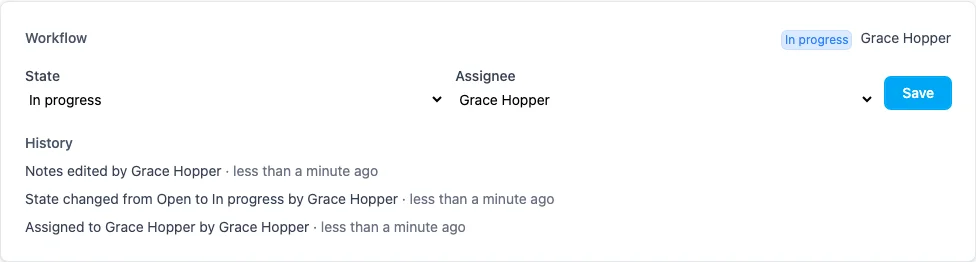
Duplicate reports become one Issue with counts and releases. Its state, assignee and notes keep a history of who changed what, in the app or through an agent. Browser-extension reports stay out.

An Issue's workflow card with state, assignee and the history of changes

Quickstart

Two headers. That's it.

Add two response headers and browsers start sending reports automatically. No SDK, no client-side code.

1

Define a reporting endpoint

Tell browsers where to send reports with the Reporting-Endpoints response header.

HTTP
Reporting-Endpoints: default="https://reporting-api.app/browser-reports/YOUR-ENDPOINT-UUID"
2

Point your policies at it

Add a report-to directive to your CSP (or any other browser policy header) and you're done.

HTTP
Content-Security-Policy-Report-Only: default-src 'self'; report-to default

Hand it to your agent

Browsers send structured reports, Reporting API App groups them into Issues, and your coding agent queries them over MCP. Setup takes less than five minutes.

Send to AppSignal, webhooks and Google Chat

Webhooks
Google Chat

Your team keeps getting reports where it already looks, whether or not an agent works on them.

Set up notifications

European-hosted. Privacy-first.

Hosted in the EU. Designed for GDPR. No tracking, no cookies, no third-party scripts.

Operating from Munich, Germany
Since 2013
Hosting and report storage
EU-only
Report retention by default
30 days
Cookies, trackers, third-party scripts
0
Visit Trust Center

Simple, transparent pricing

Start free, scale as you grow. No surprise charges.

Ready to hand browser reports to your agent?

Add two headers, connect your agent, and see what your users' browsers report. Setup takes less than 5 minutes.